Boom Reel Selection Guide for Spill Response Programs
A boom reel should be selected around the containment boom and the way crews will deploy, recover, transport, and store it. Start with the boom type, overall dimensions, total length, and weight. Then decide whether the reel should be manual or powered, fixed or mobile, and what controls, lifting features, weather protection, and inflation equipment the program requires.
A reel is more than an accessory. For longer boom runs, it can keep the barrier organized, reduce handling during deployment, and provide a controlled method for recovery. The right setup helps turn stored boom into equipment that crews can put to work.
Start With the Boom, Not the Reel
The reel must be sized for the boom it will carry. A procurement team should provide the manufacturer with the exact boom model whenever possible, not just the total footage.
Important details include:
- Boom type: foam-filled curtain boom, fence boom, inflatable boom, or auto-inflating boom
- Overall height from the top of the float to the bottom of the skirt
- Float diameter or thickness
- Total connected length
- Dry weight and anticipated recovery conditions
- End connectors, tow hardware, inflation hoses, and other components that will be stored with the boom
Inflatable and auto-inflating designs generally store more compactly than foam-filled boom. Some foam flotation models can also be stored on reels, but the spool width and diameter must match the bulk and shape of the specific product.
Do not select capacity from length alone. Two 500-foot boom systems can require different reels if their float dimensions, skirt depth, construction, or stored profile differ.
Choose a Manual or Powered Boom Reel
Manual reels can be practical for shorter lengths and lighter boom where a trained crew can operate the system without excessive handling. They have fewer powered components and may fit smaller programs, fixed sites, or limited deployment runs.
A powered boom reel is generally the better fit when the boom is heavier, the stored length is greater, or recovery would otherwise require substantial manual effort. Hydraulic systems provide controlled reel rotation and can be paired with controls, brakes, and power units selected for the reel and its load.
For powered systems, determine what energy source is available at the deployment point. Diesel-hydraulic power can support remote operations where electrical service is not available. Electric-hydraulic power may suit fixed installations with reliable power access. Inflatable boom systems may also need a portable or integrated air blower, so inflation should be planned as part of the reel package rather than added later.
Match the Reel to the Deployment Location
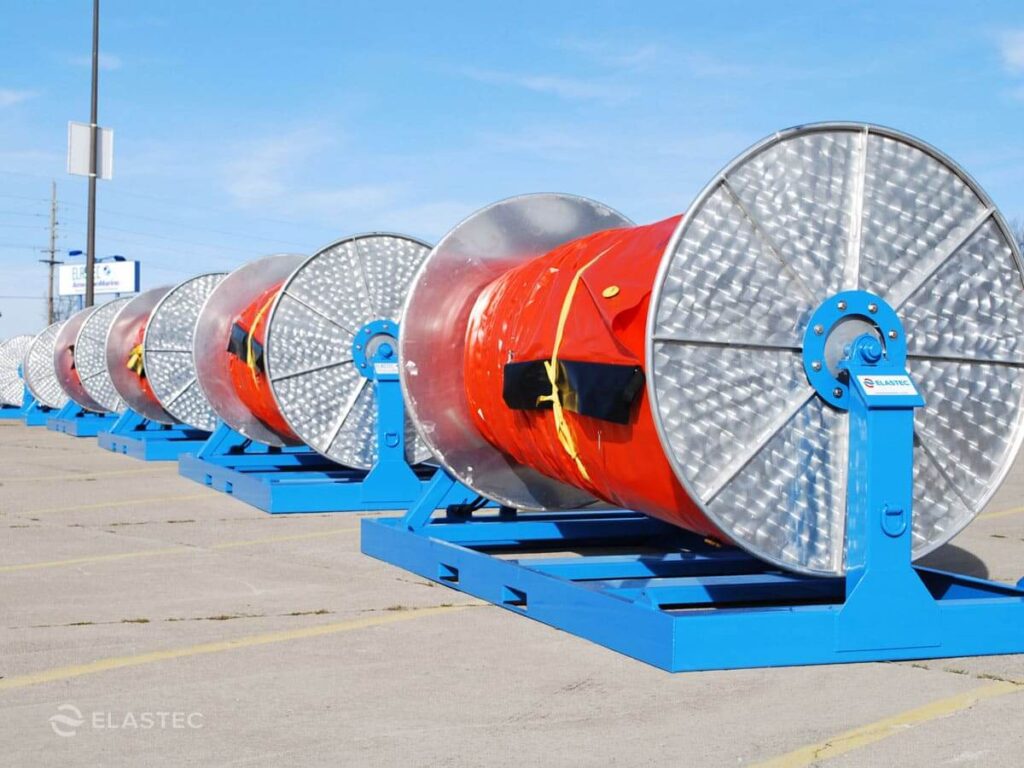
A boom reel can be configured as a fixed installation, skid-mounted unit, trailer-mounted system, or part of a containerized response package.
Fixed or Skid-Mounted Reels
A fixed reel may make sense near a dock, transfer area, intake, or other known control point. A skid-mounted reel provides more placement flexibility but still requires a suitable lifting and transport plan.
Fork pockets or container twist-lock provisions may be useful when equipment will be moved with forklifts, cranes, trucks, or ships.
Trailer-Mounted Reels
A trailer-mounted boom reel supports response across multiple locations. The complete package should be evaluated for road transport, site access, turning room, setup space, stabilization, and the direction the boom will leave the spool.
Trailer lights, brakes, stabilizers, and equipment storage should be specified for the intended operating area.
Containerized Reels
A container can protect the reel, boom, power unit, and accessories while keeping related equipment together. Door placement and interior clearance matter. Crews need room to reach controls, inspect equipment, connect hydraulic or inflation lines, and deploy the boom with a suitable lead angle from the reel.
ELASTEC equipment containers can be configured with side-opening doors, storage racks, hanging rails, and space for boom reel systems.
Specify the Features That Affect Operation
The basic frame and spool are only part of the buying decision. Review these options with the boom manufacturer:
- Free-wheel capability for deployment
- Brakes and reel controls
- Guide rollers that help distribute boom across the spool
- Aluminum or steel spool construction
- Painted or galvanized frame
- Protective covers for the reel, boom, and power unit
- Fork pockets or four-way fork access
- Trailer, skid, deck, or container mounting
- Integrated hydraulic power or air-inflation equipment
- Placement of operating controls
- Space for hoses, bridles, connectors, repair materials, and tools
ELASTEC lists free-wheeling operation, brakes, controls, guide rollers, aluminum or steel spools, protective covers, fork pockets, and several mounting arrangements among its available boom reel configurations. Availability should be confirmed for the reel size being considered.
Not every option is needed on every reel. The goal is a configuration that fits how the response team actually works.
Plan for Recovery, Inspection, and Storage
A reel that deploys well but is difficult to recover can slow the second half of the operation. Review the intended retrieval method, crew positions, power requirements, cleaning area, and path from the water back to the spool.
After use, boom may need decontamination, inspection, drying, repair, and orderly rewinding before it returns to standby. The storage location should protect the boom from avoidable weather, UV exposure, moisture, pests, and contact with sharp objects. Controls, hydraulic connections, brakes, fasteners, covers, and the power unit should remain accessible for routine inspection.
A practical readiness review should also include drills. Crews should know how to release the brake, operate the controls, manage the boom as it leaves or returns to the spool, connect sections, use inflation equipment, and secure the system after recovery.
Boom Reel Selection Checklist
Before requesting a recommendation or quote, gather:
- Boom manufacturer, model, type, and dimensions
- Total boom length per reel
- Dry weight and available load information
- Manual or powered preference
- Diesel-hydraulic or electric-hydraulic requirements
- Inflation equipment needs
- Fixed, skid, trailer, deck, or container mounting
- Available footprint, access, and lifting method
- Indoor, outdoor, freshwater, saltwater, or corrosive exposure
- Transport restrictions
- Desired brakes, controls, guide rollers, covers, and fork pockets
- Typical crew size and training level
- Recovery, cleaning, inspection, and storage workflow
Build the Reel Into the Response System
The right boom reel is the one that matches the barrier, the site, the crew, and the recovery plan. Selecting these components together helps avoid a reel that is undersized, difficult to move, poorly powered, or awkward to operate.
To discuss an application, provide the boom type and length, deployment location, available power, mounting preference, storage conditions, and expected transport method. An equipment specialist can use that information to recommend a practical reel and power configuration.
Connect With Us
Sign up for our newsletters to receive the latest news and product information from Elastec.