
Oil Spill Response Equipment
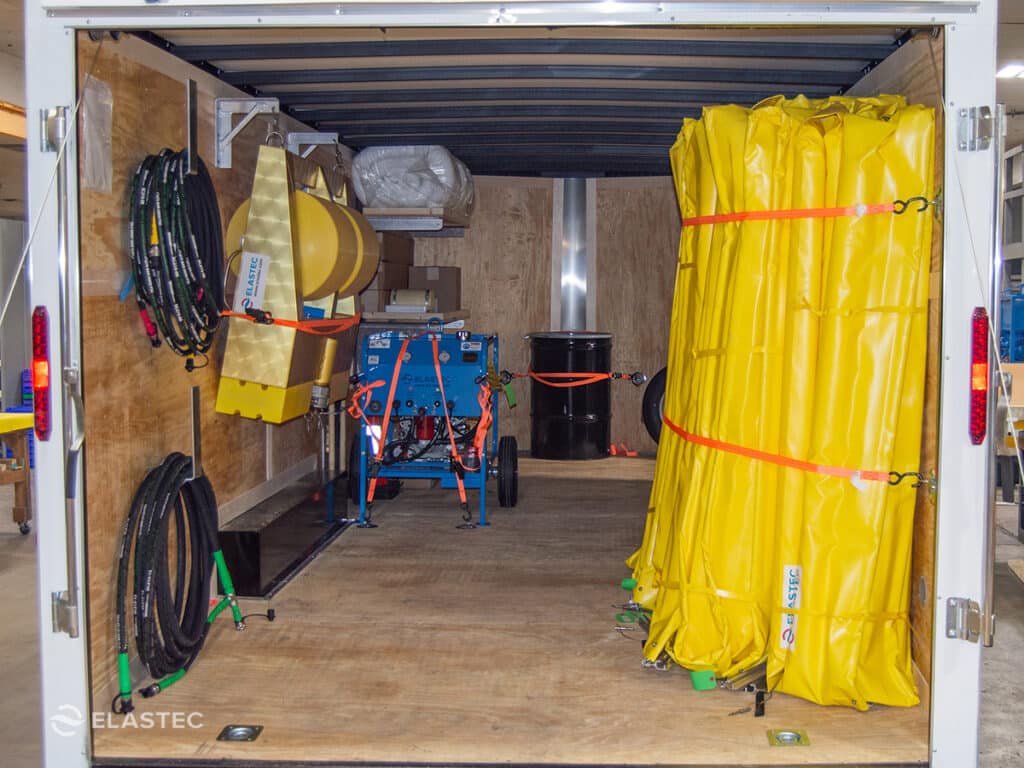
Oil spill response equipment works as a system to control the spread of oil, recover it from the water or surrounding environment, transfer recovered liquids, provide temporary storage and support the people and equipment working at the spill site.
The individual equipment options selected for a response depend on the location, water conditions, type and condition of the oil, access to the spill, available personnel and vessels, and the amount of recovered material that must be handled.
Elastec provides oil spill response equipment and systems for inland, fast-moving water, nearshore, offshore, and other response environments.
Looking for individual products? View our complete Oil Spill Equipment list.
What Does Oil Spill Response Equipment Need to Do?
An effective response may involve several different equipment functions. The exact combination depends on the incident, but mechanical oil spill response commonly includes equipment for containment, recovery, transfer, temporary storage, and deployment support.
Contain and Control the Oil
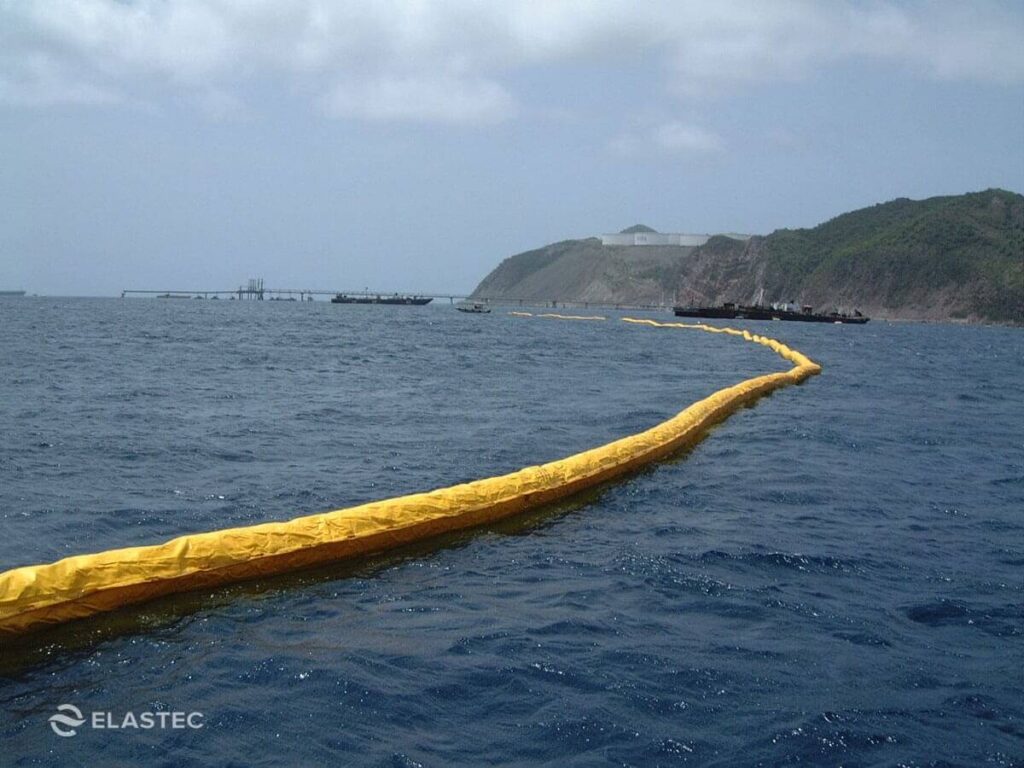
Containment equipment is used to limit the movement of floating oil, divert it away from sensitive areas or concentrate it where recovery equipment can operate more effectively.
Oil containment boom is commonly used for this purpose. The type and configuration of boom depends on factors such as water depth, current, waves, shoreline conditions and how the boom will be deployed.
Moving-water operations may also require specialized deployment equipment such as BoomVane™ to position boom where conventional deployment methods are difficult.
Recover the Oil
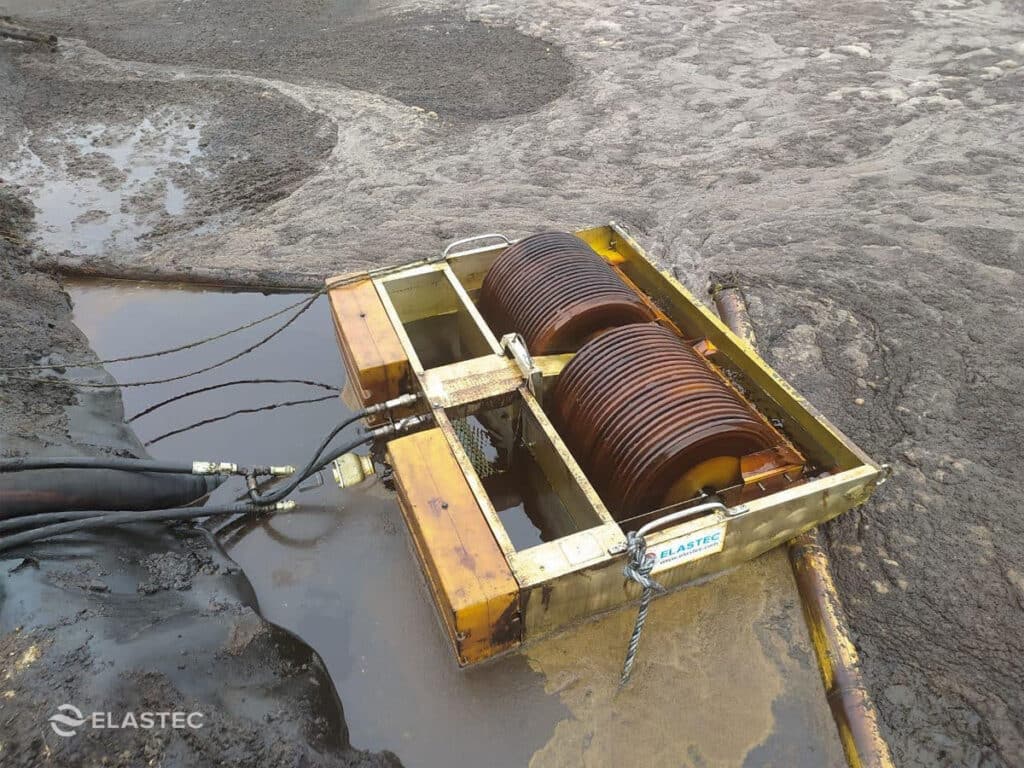
Once oil has been contained or concentrated, mechanical recovery equipment can remove it from the surface.
Oil skimmers are available in different designs because oil properties and operating conditions can vary considerably from one spill to another. Drum, disc, brush, belt, weir and suction systems provide different approaches to recovering floating oil.
Vacuum systems and absorbents can also support recovery and cleanup, particularly in areas where conventional skimming equipment cannot be used effectively or where residual oil remains.
Transfer Recovered Liquids
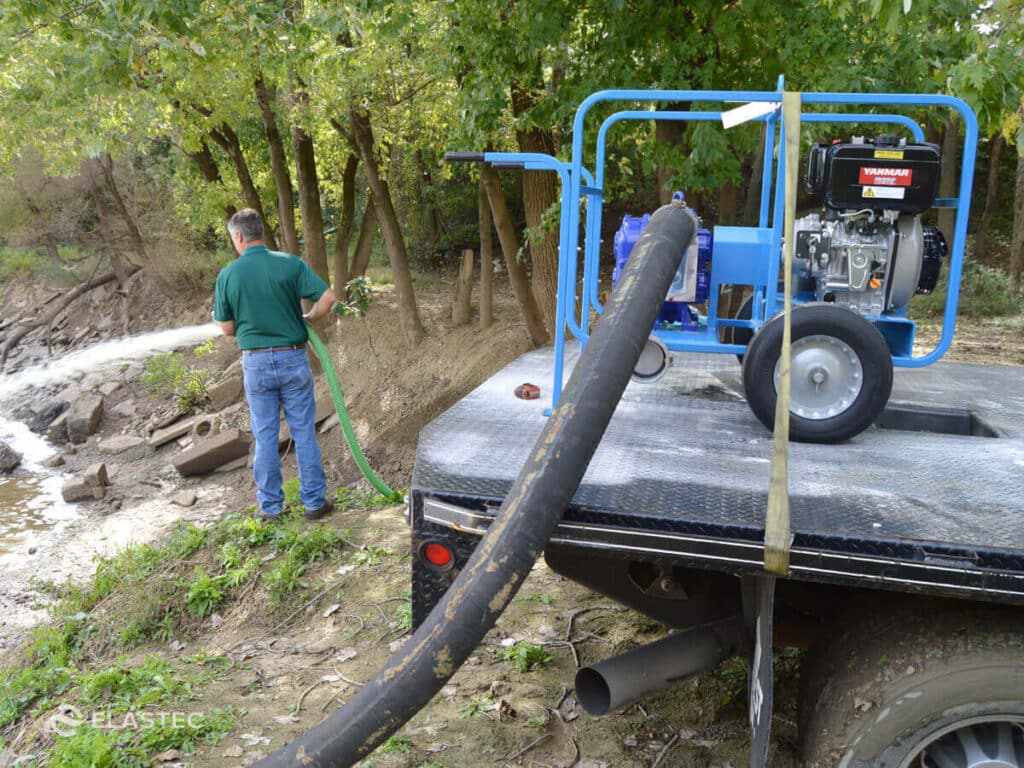
Recovered oil must be moved away from the collection point so recovery can continue.
Pumps, hoses and related equipment connect skimmers and other recovery devices with temporary storage. Pumping capacity should be matched to the recovery system and the properties of the liquid being handled.
Hydraulic power units may also be required to operate skimmers, pumps, boom reels and other response equipment.
Provide Temporary Storage
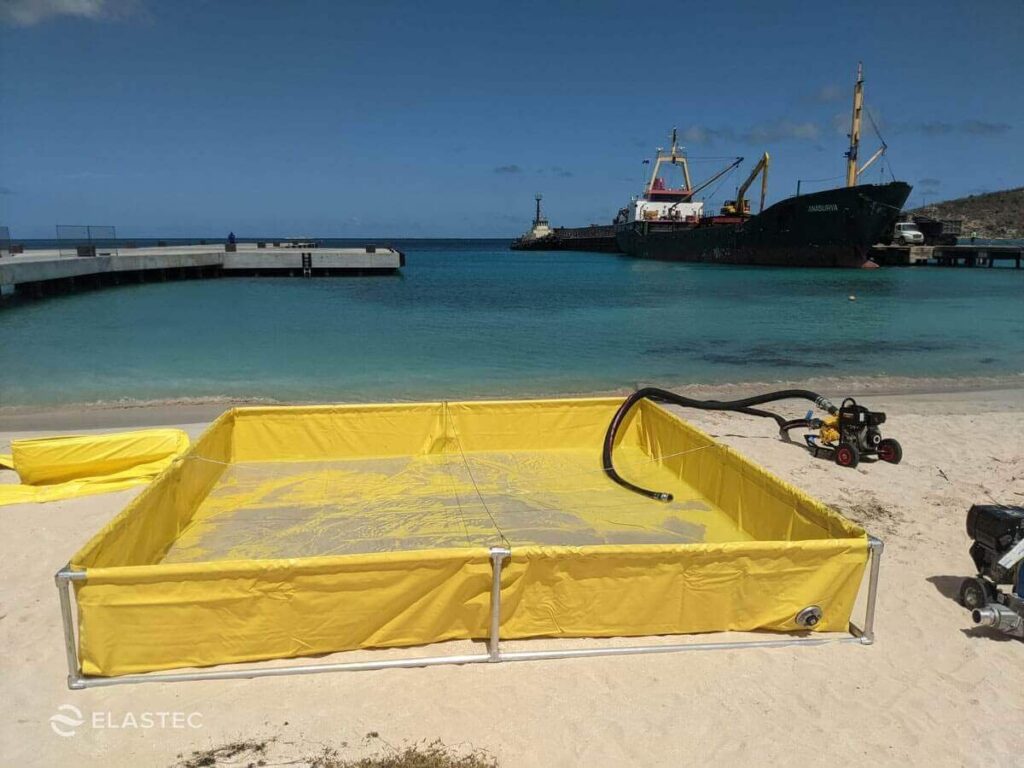
Oil spill recovery does not end when oil enters the skimmer. Recovered oil and water must have somewhere to go.
Portable tanks, deck tanks, bladders and other temporary storage systems can be used to hold recovered liquids until they can be transferred for additional treatment, storage or disposal.
Available storage capacity should be considered as part of the overall response system so that recovery operations are not limited by a lack of space for recovered liquids.
Deploy, Transport and Support the Equipment
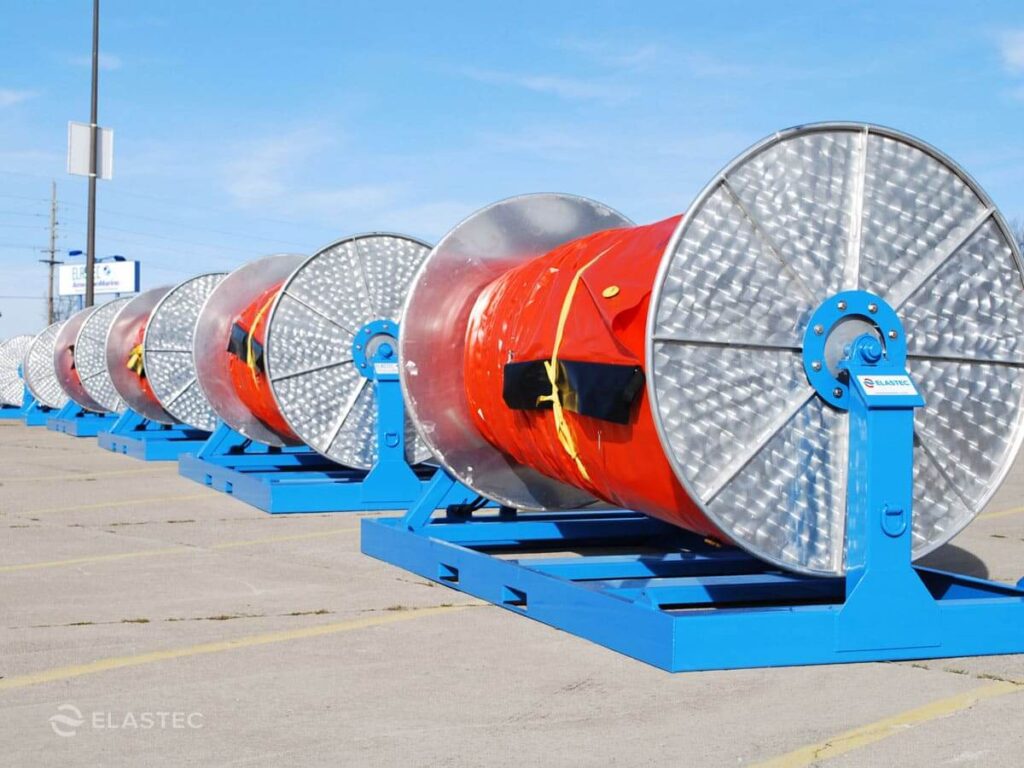
Response equipment must be able to reach the spill site and be put into operation under actual field conditions.
Boom reels can simplify containment boom storage, deployment and recovery. Response trailers and equipment containers can keep equipment organized and ready for transport. Work boats and specialized vehicles can provide access, transport equipment and support operations in locations where road or shoreline access is limited.
The equipment package should account not only for recovery capacity but also for how the equipment will be transported, deployed, powered, operated and recovered after use.
Oil Spill Response Equipment Should Work as a System
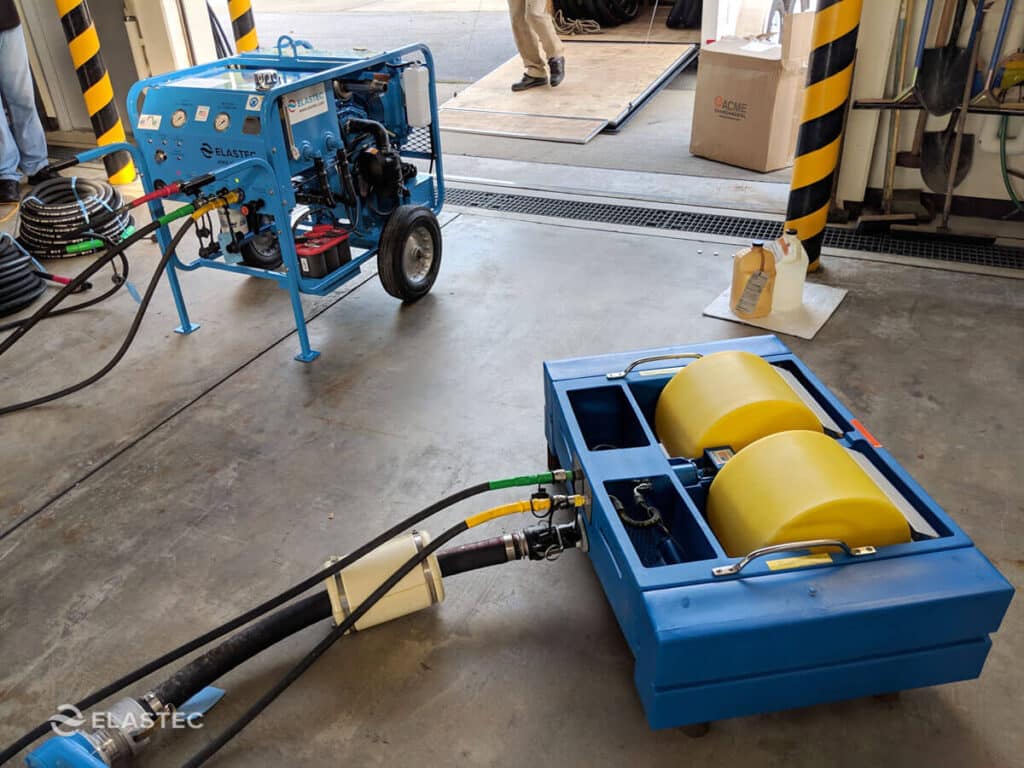
A response system is only as practical as the equipment supporting each stage of the operation.
A skimmer, for example, must have adequate pumping capacity and somewhere to send the recovered liquid. Containment boom must be suitable for the water conditions and have a practical method of deployment. Pumps, reels and other hydraulic equipment need an appropriate power source. Boats, trailers, containers and vehicles may be required simply to get the equipment where it needs to operate.
For this reason, oil spill response equipment should be evaluated as a complete working system rather than as a collection of individual products.
Learn How to Size a Mechanical Recovery System.
Matching Response Equipment to Operating Conditions
There is no single equipment package that is right for every oil spill.
Equipment requirements can change significantly depending on where the response takes place.
Fast-moving rivers may require different containment and deployment methods than calm inland water. Remote inland incidents can make equipment access and transportation a major consideration. Offshore operations may require larger containment and recovery systems, vessel-based deployment and greater temporary storage capacity. Cold and ice conditions can create additional operating challenges.
Elastec has developed dedicated response information for these different environments and incident types.
- Learn about Arctic Oil Spill Response
- Learn about Fastwater Oil Spill Response
- Learn about Inland Oil Spill Response
- Learn about Offshore Oil Spill Response
- Learn about Pipeline Oil Spill Response
- Learn about Railway Oil Spill Response
Equipment Readiness Is Part of Spill Response
Having the right equipment is only useful if responders can deploy and operate it when it is needed.
Response organizations should consider how equipment will be stored, transported, assembled, powered and operated before an incident occurs. Equipment configuration, maintenance and hands-on familiarity can all affect how efficiently a response system can be put into service.
Elastec offers equipment training and oil spill response workshops that give responders experience with containment boom, skimmers and other response equipment in classroom and field settings.
Plan an Oil Spill Response Equipment Package
Elastec works with Oil Spill Recovery Organizations, energy companies, refineries, government agencies, coast guards, transportation companies, and other organizations that maintain oil spill response capabilities.
If you are developing a new response package or reviewing existing equipment, tell us about the environment you are preparing for, the oil you expect to encounter, the equipment you already have, and how the system will be deployed.
We can help identify the equipment and supporting components needed to build a practical response system.