Turbidity Curtain vs Silt Fence: Key Differences
Controlling sediment is critical for protecting water quality during construction, dredging, and land development projects. Two commonly used solutions are turbidity curtains and silt fences. While they serve a similar purpose—preventing sediment from spreading—they are designed for very different environments and applications.
Understanding the differences between turbidity curtains and silt fences will help you choose the right solution for your project and maintain compliance with environmental regulations.
What Is a Turbidity Curtain?
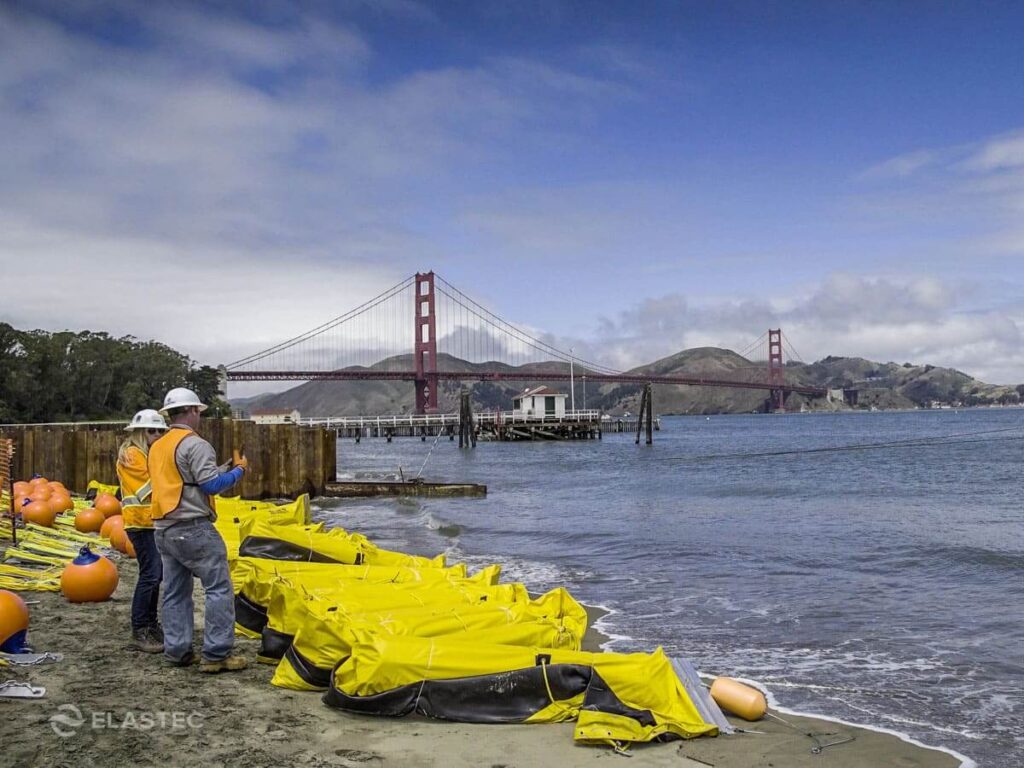
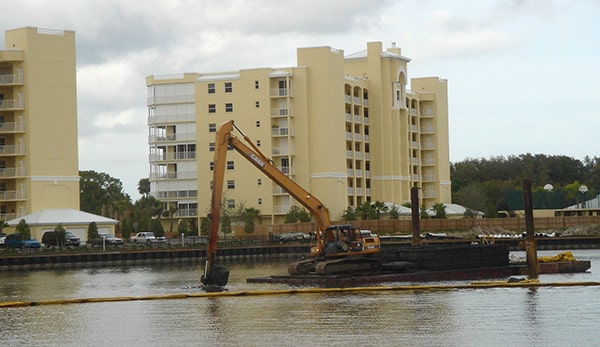
A turbidity curtain (also known as a silt curtain or turbidity barrier) is a floating barrier installed in water to contain suspended sediment. It typically consists of a flotation device at the top, a skirt that hangs below the surface, and a ballast chain or weight at the bottom to keep it in place.
Key Characteristics:
- Designed for in-water use
- Floats on the surface with a submerged skirt
- Anchored to maintain position in currents
- Allows sediment to settle within a controlled area
- Common Applications:
- Marine construction projects
- Dredging operations
- Shoreline stabilization
- Bridge and pier construction
What Is a Silt Fence?
A silt fence is a temporary sediment control barrier installed on land to intercept and slow runoff. It is typically made of geotextile fabric stretched between wooden or metal stakes and partially buried in the ground.
- Key Characteristics:
- Designed for land-based use
- Installed along slopes or perimeters
- Slows runoff and traps sediment
- Easy to install and remove
- Common Applications:
- Construction site perimeters
- Roadwork and grading projects
- Residential development
- Stormwater runoff control
Use Environments: Water vs Land
The most important distinction between turbidity curtains and silt fences is where they are used.
Turbidity Curtains:
- Installed in water bodies such as lakes, rivers, harbors, and coastal areas
- Used when sediment is already suspended or likely to be disturbed underwater
- Must withstand currents, waves, and changing water levels
Silt Fences:
- Installed on land, typically along contours or site boundaries
- Used to intercept sediment before it enters waterways
- Designed for surface runoff, not standing water
Side-by-Side Comparison
| Feature | Turbidity Curtain | Silt Fence |
| Primary Use | In-water sediment control | Land-based erosion control |
| Installation Location | Lakes, rivers, coastal areas | Construction sites, slopes |
| Structure | Floating boom with submerged skirt | Fabric barrier with stakes |
| Function | Contains suspended sediment | Filters sediment from runoff |
| Durability | Designed for currents and waves | Designed for light runoff conditions |
| Typical Lifespan | Longer-term projects | Temporary applications |
When Should You Use Each?
Use a Turbidity Curtain When:
- Work is occurring in or near water
- Sediment is being disturbed underwater
- You need to contain turbidity within a defined area
- Regulatory compliance requires in-water sediment control
Use a Silt Fence When:
- You are managing stormwater runoff on land
- Sediment needs to be stopped before reaching a waterway
- The project involves grading, excavation, or land clearing
- A temporary, cost-effective barrier is needed
Can They Be Used Together?
Yes—many projects benefit from using both solutions. For example:
A construction site near a lake may use silt fences on land to control runoff. At the same time, turbidity curtains can be deployed in the water to contain any sediment that enters
This layered approach provides comprehensive sediment control and helps ensure environmental compliance.
Turbidity curtains and silt fences are both essential tools for sediment control, but they serve distinct roles. Turbidity curtains are designed for in-water applications, containing suspended sediment during marine or dredging operations. Silt fences, on the other hand, are land-based barriers that prevent sediment-laden runoff from leaving a site.
Choosing the right solution—or combination of both—can make a significant difference in protecting water quality and meeting regulatory requirements.
Need help selecting the right turbidity curtain for your project? Contact Elastec today for expert guidance and customized solutions.
Connect With Us
Sign up for our newsletters to receive the latest news and product information from Elastec.