Water hyacinth (Pontederia crassipes) is often described as a beautiful aquatic plant—but beneath its attractive appearance lies one of the most destructive invasive species in freshwater systems. Originally native to South America, water hyacinth now infests freshwater bodies worldwide, forming dense mats that disrupt ecosystems, infrastructure, and public health.
At Elastec, we help communities and water managers address these challenges using purpose-built aquatic barriers and containment solutions.
Ecological Impacts: When Floating Weeds Become Deadly Mats
Oxygen Depletion and Dead Zones
Thick water hyacinth mats prevent oxygen from dissolving into the water below. As the plants die and decompose, bacterial breakdown consumes dissolved oxygen, leading to hypoxic conditions where fish and native aquatic life cannot survive.
Shaded Underwater Ecosystems
The floating canopy blocks sunlight, preventing submerged vegetation from photosynthesizing. This collapse of primary producers weakens aquatic food webs and drives declines in biodiversity.
Biodiversity Loss
Water hyacinth spreads rapidly and outcompetes native plants for space and nutrients, creating dense monocultures that displace native flora and fauna.
Infrastructure and Economic Disruption
Navigation and Recreation Blockages
Water hyacinth mats are strong enough to jam boat engines, tangle propellers, and completely block waterways, stalling commerce and recreation alike.
Hydroelectric and Water System Strain
Floating weeds can clog dam intakes, river sluices, and treatment systems, increasing maintenance costs and reducing power generation efficiency.
Increased Flood Risk
Infestations in narrow channels can act like natural dams, restricting water flow and contributing to flooding.
Public Health: More Than Just a Weed
Dense hyacinth mats trap stagnant water that becomes perfect breeding habitat for mosquitoes and snails. These insects and mollusks are vectors for diseases such as malaria, dengue, and schistosomiasis — presenting real health risks in affected communities.
How Aquatic Barriers Help Control Water Hyacinth
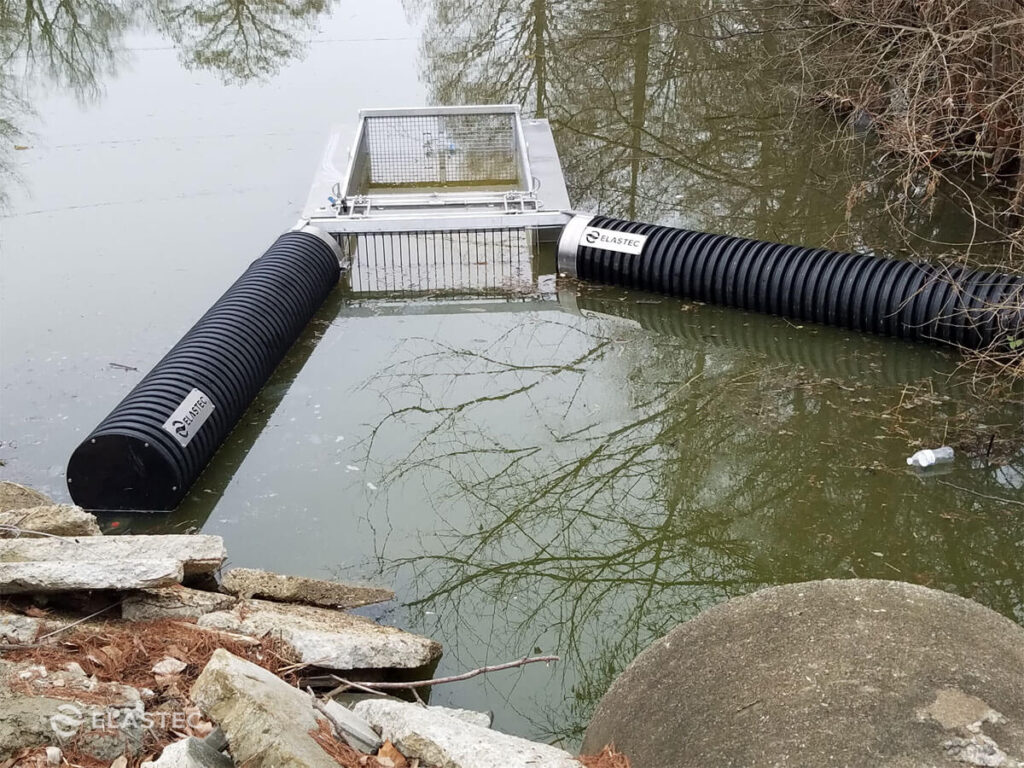
Elastec’s aquatic weed barrier solutions provide a practical way to slow the spread of water hyacinth and support long-term management efforts.
Containment and Concentration
Rather than allowing invasive mats to drift freely, Elastec aquatic barriers corral them into manageable zones — making it far easier for mechanical harvesters or crews to remove them efficiently.
Protecting Critical Infrastructure
Strategic placement upstream of dams, water intakes, and bridges lets booms deflect weeds away from vulnerable points. These barriers prevent heavy mat buildup that could otherwise reduce system efficiency.
Preventing Re-infestation
After an area has been cleared using mechanical methods or herbicide, booms act as a physical border to limit new fragments or seeds from drifting back in.
Specialized Mesh Boom Designs
Elastec’s aquatic weed booms allow water to flow through while still capturing plant stems and roots — minimizing stress on the barrier system during high-current conditions.
Connect With Us
Sign up for our newsletters to receive the latest news and product information from Elastec.