
TURBIDITY CURTAINS (SILT CURTAINS)
A turbidity curtain, also known as a silt curtain, silt screen, or turbidity barrier, is a floating barrier used to control and contain suspended sediment in water during marine construction, dredging, and environmental remediation projects. These barriers help prevent sediment from spreading, protecting water quality and helping with compliance with environmental regulations.
Elastec turbidity curtains are designed to help maintain compliance on active job sites while minimizing environmental impact. American Marine, a division of Elastec, has been manufacturing turbidity curtains since 1967. Select models are available in stock through our online store, and additional configurations can be quoted upon request. You can also review frequently asked questions or explore turbidity curtain requirements by state to support your project planning.
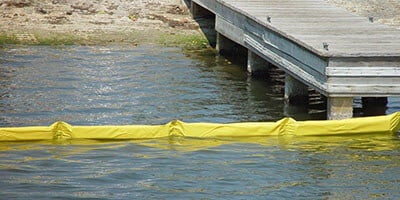
Type 1 Turbidity Curtains
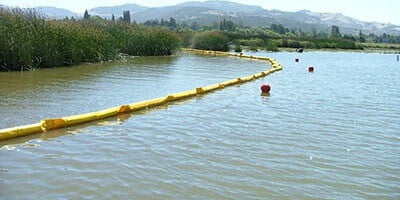
Type 2 Turbidity Curtains
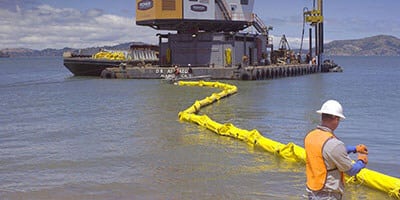
Type 3 Turbidity Curtains
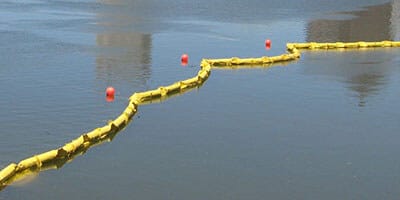
Custom Turbidity Curtains
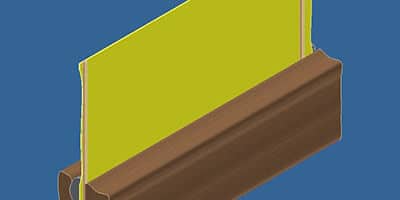
SiltMax Staked Barrier
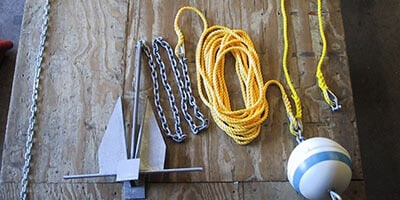
Turbidity Curtain Accessories
How Do Turbidity Curtains Work?
Turbidity curtains work by isolating a work area and preventing sediment from dispersing into the surrounding water.
They function by:
- Floating at the water surface using buoyant flotation
- Extending downward with a permeable or impermeable skirt
- Slowing water movement to allow sediment to settle
- Anchoring in place to maintain position in currents
Proper installation is critical to ensure effective sediment containment.
Types of Turbidity Curtains:
Depending on the water conditions and project needs, different types of turbidity curtains exist:
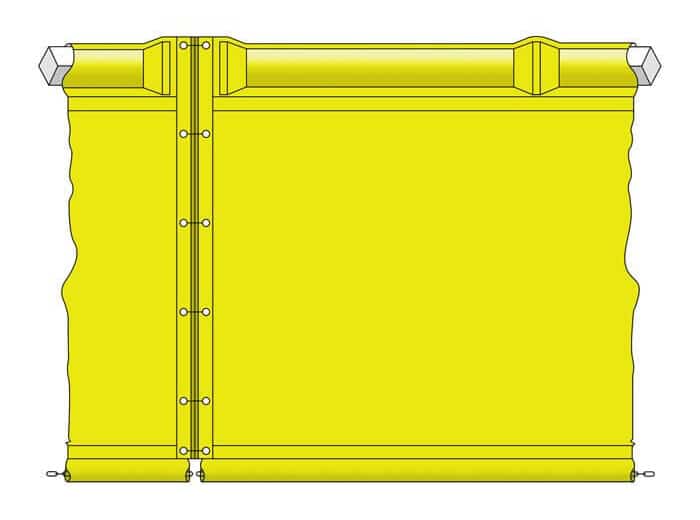
Type 1 – Calm Water
- Suitable for calm water, with a lightweight skirt for easy deployment
- Minimal current and wave action
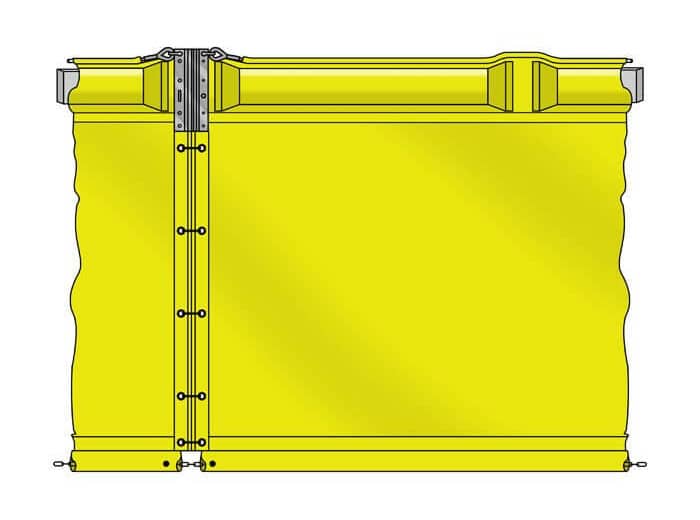
Type 2 – Moderate Conditions
- Suitable for rivers and light currents
- Reinforced for increased durability
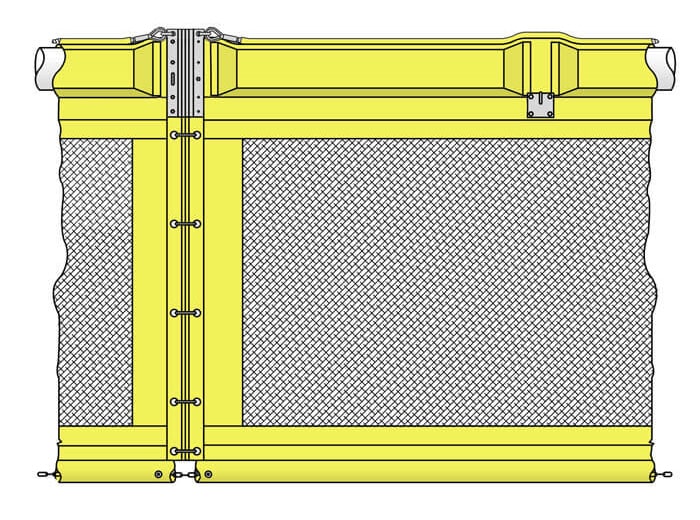
Type 3 – Strong Currents
- Designed for tidal areas and harsh environments
- Heavy-duty construction and anchoring systems
When Should You Use a Turbidity Curtain?
Turbidity curtains are used in a wide range of applications, including:
- Dredging operations
- Bridge and pier construction
- Shoreline stabilization projects
- Marine construction
- Environmental remediation
They are often required by regulatory agencies to prevent sediment pollution.
DOT and Regulatory Requirements
Many state Departments of Transportation (DOTs) and environmental agencies require turbidity curtains for in-water construction projects.
Requirements may include:
- Minimum skirt depth
- Specific fabric strength
- Anchoring and deployment standards
Explore turbidity curtain requirements by state to ensure compliance. Always consult your state’s DOT website or contact the relevant authorities for the latest and most accurate information.
How to Choose the Right Turbidity Curtain
Selecting the right turbidity curtain depends on several factors:
- Water depth
- Current speed
- Wave conditions
- Project duration
- Regulatory requirements
- Wind speed and conditions
Choosing the correct configuration ensures optimal sediment control and durability.
Comparative Turbidity Curtain Specification Table
| Model | Applications | Fabric | Float Size | Ballast | Depth | Section Length |
|---|---|---|---|---|---|---|
| Staked Curtain | Shallow Water No Flow | 18 oz Reinforced PVC Coated | N/A | N/A | <3 ft <1 m | 100 ft 30 m |
| Stillwater Screen | Inland Waterways Calm Conditions | 18 oz Vinyl Laminated | 6, 8, 12 inch 15, 20, 30 cm | 1/4 inch 6 mm Galv. Chain | 3-30 ft 1-9 m | 100 ft 30 m |
| Fastwater Screen | Rivers/Streams/Lakes Moving Water, Winds and Waves | 22 oz Vinyl Coated | 8, 12 inch 20, 30 cm | 5/16 inch 8 mm Galv. Chain | 3-30 ft 1-9 m | 100 ft 30 m |
| Ruffwater Screen | Rivers/Streams/Lakes Deep Water with Difficult Conditions | 22 oz Vinyl Coated | 12 inch 30 cm | 3/8 inch 10 mm Galv. Chain | 3-30 ft 1-9 m | 100 ft 30 m |
| Siltmax I Economy | Calm Water Canals Ponds/Reservoirs Short Term Installation | 13 oz Reinforced PVC Coated | 6 inch 15 cm Square EPS Marine Quality | 3/16 inch 5 mm Galv. Chain | 5 ft 1.5 m (custom available) | 50, 100 ft 15, 30 m |
| Siltmax I DOT | Inland Waterways Calm Conditions | 18 oz Vinyl Laminated | 6 inch 15 cm Square EPS Marine Quality | 1/4 inch 6 mm Galv. Chain | 5 ft 1.5 m (custom available) | 50, 100 ft 15, 30 m |
| Siltmax II DOT | Mild Currents, Waves and Wind Rapid Deployment and Storage | 18 oz Vinyl PVC | 6 inch 15 cm Square EPS Marine Quality | 5/16 inch 8 mm Galv. Chain | 5 ft 1.5 m (custom available) | 50, 100 ft 15, 30 m |
| Siltmax III DOT | Tidal Zones, Rivers and Bays Rapid Deployment and Medium Flows | 18 oz Vinyl PVC | 6 inch 15 cm Square EPS Marine Quality | 5/16 inch 8 mm Galv. Chain | 5 ft 1.5 m (custom available) | 50, 100 ft 15, 30 m |
Turbidity Curtain Options
Elastec curtains can be provided with multiple options. Please contact us for further specifications.
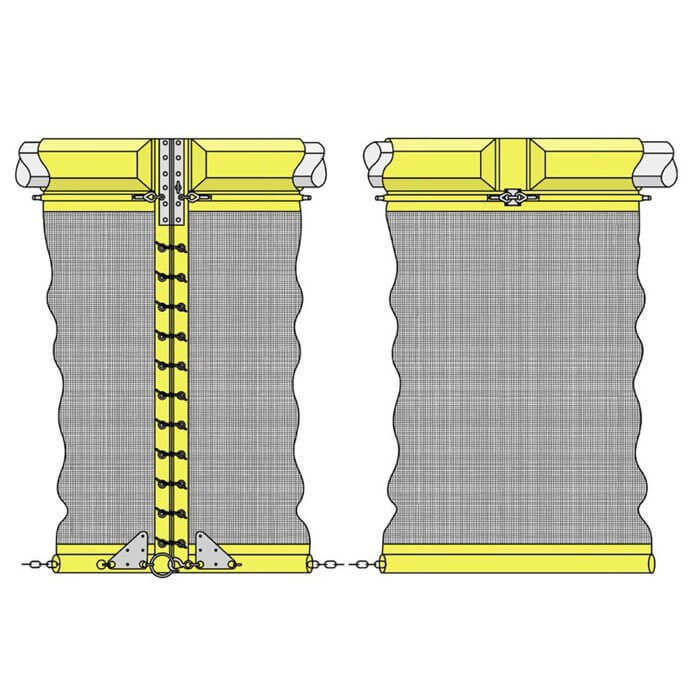
Filter Cloth
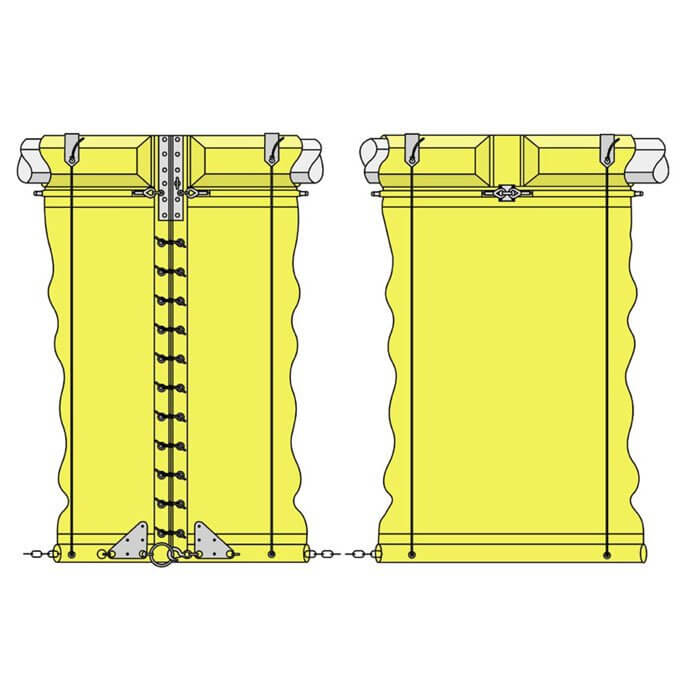
Reefing System
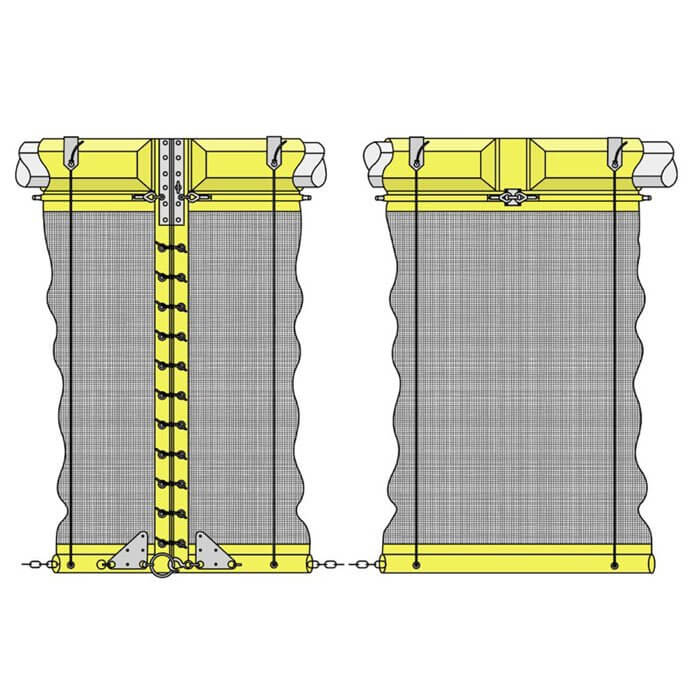
Filter Cloth and Reefing System
Custom Barriers
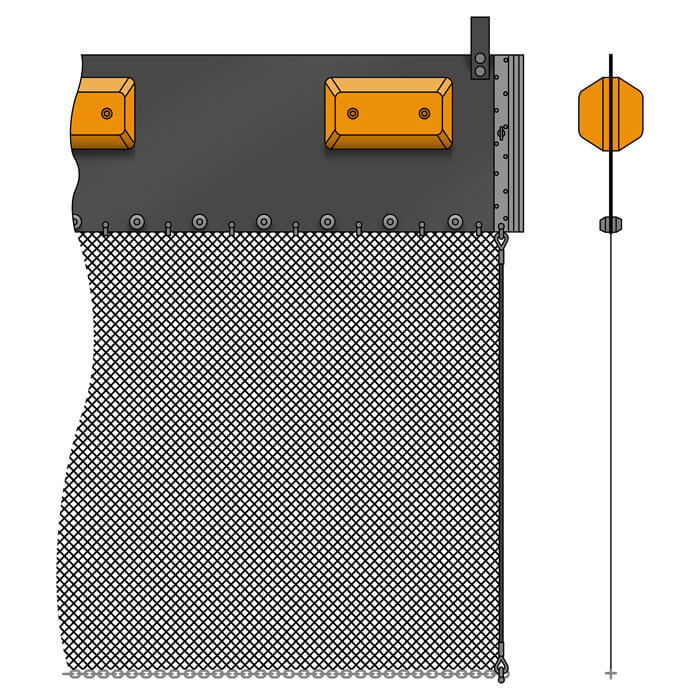
PermaFence Netboom
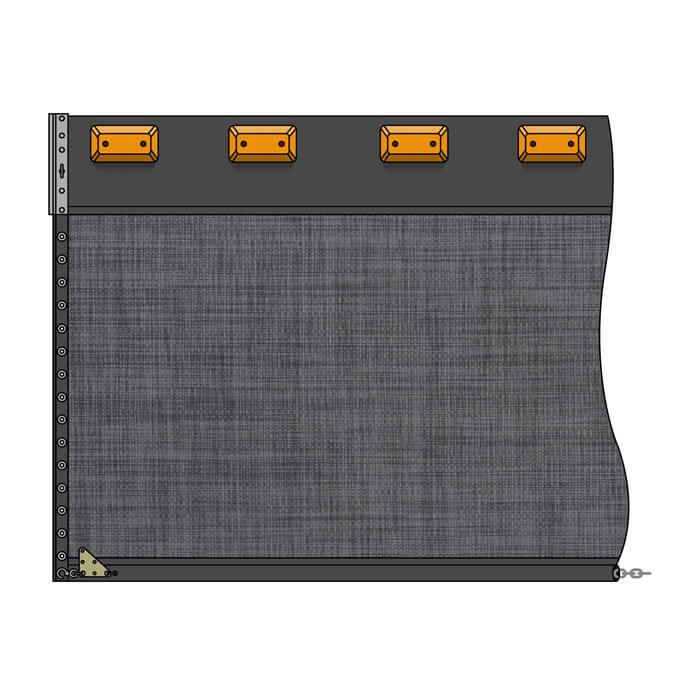
PermaFence Screen
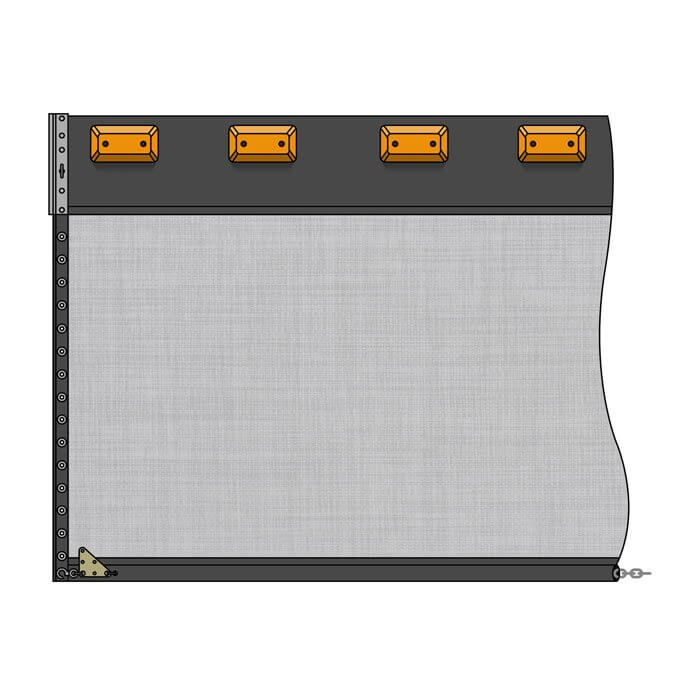
PermaFence Screen with Filter Cloth
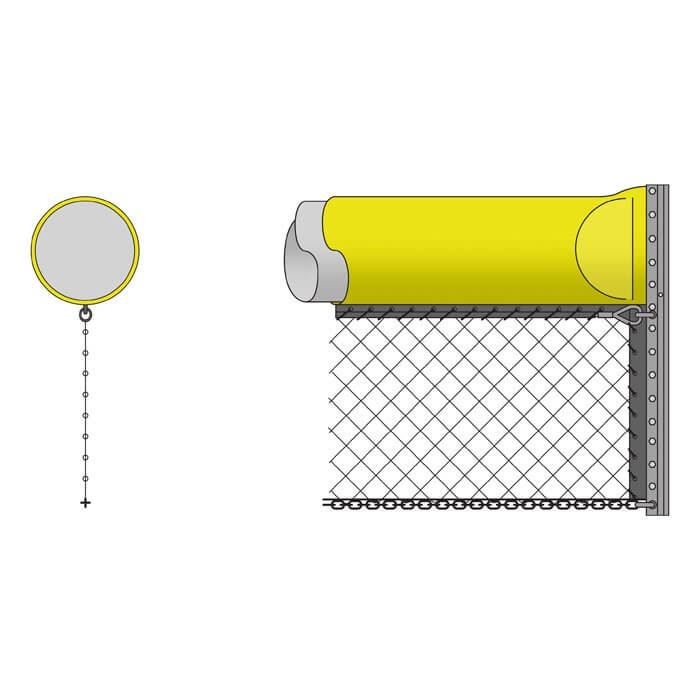
Soft Top Netboom
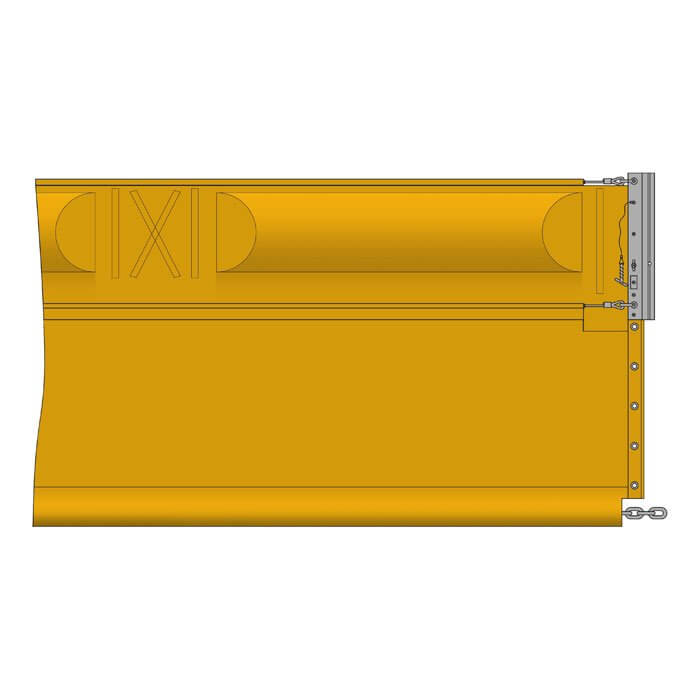
Custom Optimax Curtain
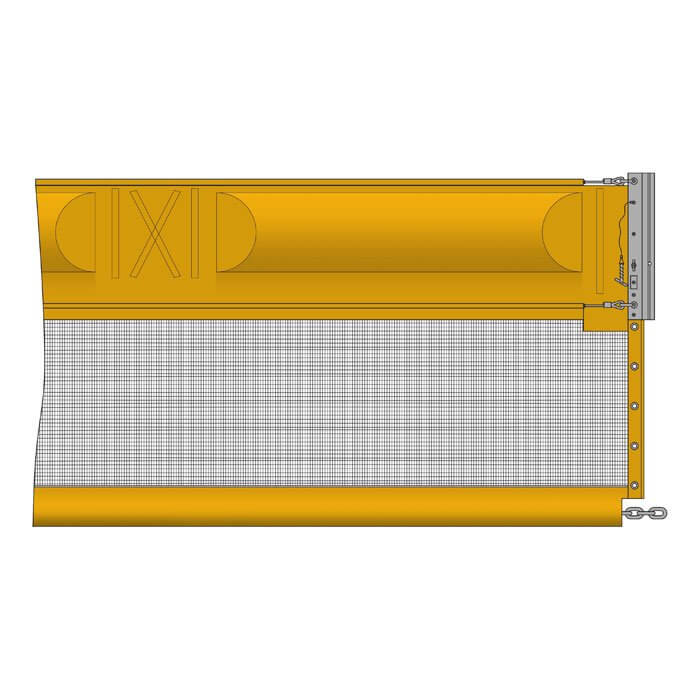
Custom Optimax Screen
Clean Water Act and National Pollution Discharge Elimination System (NPDES)
The implementation of the Clean Water Act and Phase II of the National Pollution Discharge Elimination System (NPDES) has led to major changes in operating procedures for the industrial sector. According to the NPDES, sediment and debris from sites require MS4 operators to develop and implement a stormwater management program to reduce the discharge of pollutants in discharges from the MS4 to the maximum extent practicable, and to meet other permit requirements as determined appropriate by the permitting authority.
The implementation of the Clean Water Act and Phase II of the National Pollution Discharge Elimination System (NPDES) has led to major changes in operating procedures for the industrial sector. According to the NPDES, sediment and debris from sites require MS4 operators to develop and implement a stormwater management program to reduce the discharge of pollutants in discharges from the MS4 to the maximum extent practicable, and to meet other permit requirements as determined appropriate by the permitting authority.
Requirements for suspended particulates/turbidity
According to the NPDES, “Suspended particulates in the aquatic ecosystem consist of fine-grained mineral particles, usually smaller than silt, and organic particles. Suspended particulates may enter water bodies as a result of land runoff, flooding, vegetative and planktonic breakdown, resuspension of bottom sediments, and man’s activities including dredging and filling. Particulates may remain suspended in the water column for variable periods of time as a result of such factors as agitation of the water mass, particulate specific gravity, particle shape, and physical and chemical properties of particle surfaces.” To control these particulates, the NPDES recommends using silt screens or other appropriate methods to confine suspended particulate/turbidity to a small area where settling or removal can occur.
Together, the Clean Water Act and NPDES have encouraged major product development by Elastec in order to keep up with our customers’ needs and allow them to remain in compliance with these regulations.
Elastec Type III Turbidity Curtain used near Golden Gate Bridge
Elastec Type III Ruffwater Screen was installed near the Golden Gate Bridge in San Francisco, CA. as part of the Crissy Field Drainage Improvement Project. Duane Bennish and Bill Andrus of the Cocoa branch were on site to help with the installation. Learn more about the project.
TURBIDITY CURTAIN QUESTIONNAIRE
Why Choose Elastec Turbidity Curtains?
Elastec turbidity curtains are engineered for durability and performance in demanding environments.
- Designed to meet DOT and environmental standards
- Built for a range of water conditions
- Supported by experienced environmental professionals
In order that we may recommend the best Turbidity Curtain for your project, please provide the following information. We have included some questions that will help us better understand your needs. Please answer as many as possible. If the flow rate is high, Elastec can provide modeling data to determine anchor spacing and feasibility of systems.
Turbidity Curtain Frequently Asked Questions
Are turbidity curtains in stock and ready to ship?
We offer some models of turbidity curtains in-stock from our online store. Account for lead times of a few weeks to produce other models of curtains in the factory. Most curtains will be custom and not off the shelf.
How much curtain do I need for my project?
Account for the anchor rodes. Best anchorage for turbidity curtains is a 5:1 slope. In 10′ of water you will have 50′ of anchor lines on one or both side of the curtain. Possibly into the work area.
How important are water conditions?
Water conditions (wind, wave height, flow rate) are important to ensuring proper anchorage is being used. Account for pull from intake structures, ice, debris, and wake from vessels.
How are deeper curtains affected by tidal flow?
The deeper the curtain, the calmer the conditions need to be. A curtain 30′ deep in 2 knot tidal flow will only have an effective depth of 13′ and will be difficult to keep in place even with heavy anchoring.
How deep should my turbidity curtain be?
Curtains should not touch the bottom. Flow of water is not going to be stopped by a fabric curtain. You cannot sand bag or add additional weight to the bottom of the curtain to keep it down. This will tear the curtain. Also, in calm situations, sediment can build up on the curtain making it impossible to retreive when the work is finished. Curtains will perform better the more parallel they are to the flow.
What is the difference between turbidity curtain and containment boom?
Turbidity curtains (also called silt curtains or turbidity barriers) are designed to contain suspended sediment in the water column. Containment booms are engineered to contain and control floating pollutants, most commonly oil and debris. LEARN MORE